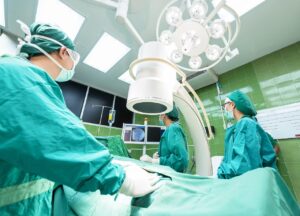
The combination of orthognathic surgery and orthodontics has always been the foundation of treatment for facial skeletal alterations. Today, thanks to new protocols and the incorporation of clear aligners, it is possible to rethink the traditional order in certain cases, reducing time and improving the patient experience without compromising the safety or stability of the result.
Coordination, key to the entire process
Orthognathic surgery acts directly on the bone structure of the face. It modifies the position and, when necessary, the projection of the upper jaw (maxilla) and lower jaw (mandible) to reestablish balanced occlusion, harmonize the facial profile, and optimize respiratory function. From a medical standpoint, it is also the procedure capable of structurally resolving obstructive sleep apnea when its cause is anatomical, as advancing the jaws widens the diameter of the upper airway.
This surgery must always be coordinated with orthodontic treatment. The reason is that the teeth need to be placed in the correct position relative to each dental arch before, during, and after the intervention to ensure a stable and functional bite. The key is not just “moving bones,” but correctly aligning the bone base and the teeth so they work together as a team.
From the classic protocol to the “surgery first” approach
For years, the usual sequence for this type of intervention has been pre-surgical orthodontics, surgery, and then finishing orthodontics. The initial phase could last around a year, which sometimes caused doubts or demotivated some patients.
The evolution of surgical techniques has allowed the development of the protocol known as “surgery first,” which immediately corrects the bone discrepancy. Subsequently, orthodontics perfects the dental alignment and interlocking.
However, not all patients are candidates for this strategy. A diagnostic study, detailed facial analysis, and joint planning between the surgeon and orthodontist are necessary. When the indication is correct, the patient can benefit from earlier aesthetic improvement and optimization of overall treatment time, while maintaining the same standards of stability and precision.
At Clínica Birbe, the approach is always coordinated. Dr. Birbe and his team work closely with a specialist in surgical orthodontics in order to design the most appropriate plan for each situation.
Clear aligners: aesthetics, comfort, and hygiene
In this context, clear aligners have represented a significant advancement. Systems like Invisalign® offer an alternative to conventional brackets in many orthodontic treatments associated with orthognathic surgery.
These are removable appliances, made of high-precision plastic material and practically imperceptible to the naked eye. They are changed periodically to produce progressive and controlled tooth movements. Their transparent and removable nature facilitates hygiene and allows patients to maintain a discreet image during their social and professional life.
From a clinical point of view, in well-indicated cases, the functional and aesthetic achievements are comparable to those obtained with traditional fixed appliances. The choice between metal brackets or aligners is not a matter of trend, but rather responds to individualized diagnostic criteria: type of malocclusion, complexity of the case, and final treatment objectives.
Global benefits: function, aesthetics, and breathing
Orthognathic surgery, correctly integrated with orthodontics, offers global benefits. On one hand, it improves contact between the teeth and reestablishes a functional bite. On the other hand, it corrects disproportions such as prominent or recessed jaws, excessively long or short faces, and gingival smiles of skeletal origin. Furthermore, of course, it balances the facial profile.
Regarding breathing, maxillomandibular advancement can increase the space of the upper airway, reducing chronic snoring and, in certain patients, resolving bothersome obstructive sleep apnea, as it treats its structural cause.
New protocols and the use of aligners allow for more personalized treatments and, in selected cases, more agile ones. These advances, together with the experience and skill of Dr. Birbe’s team, proper indication, and rigorous control, guarantee an uncomplicated evolution. When surgery and orthodontics are coordinated with professional planning, surgical success is more precise, stable, and most importantly, adapted to each patient.