
Mandibular Retrognathia in Barcelona
What Is Mandibular Retrognathia?
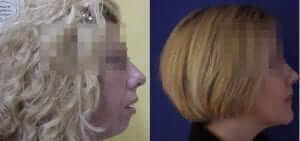
Also known as “short jaw,” it is caused by insufficient growth of the jaw, which leads to retrognathia or mandibular hypoplasia. It is typically associated with Class II dental malocclusion, characterized by an increased gap between the upper and lower teeth (increased overjet). Facial features associated with this condition include a lack of chin projection, a lack of definition in the jawline, and eversion of the lower lip. There are several facial patterns associated with a short jaw: a long face with an open bite and a short face with an overbite, for example.
It causes chewing problems, accelerated tooth wear, accelerated wear of the temporomandibular joint, gum recession, reduced chewing efficiency and strength, and often respiratory problems during sleep, including snoring and obstructive sleep apnea.
During the growth phase, it is possible to try to stimulate jaw growth using braces. But this isn’t always possible, and the treatment ultimately involves orthognathic surgery.
Surgical Steps
In some cases, we can limit surgical treatment to a simple mandibular advancement. It is a simple mandibular osteotomy performed on an outpatient basis in a procedure lasting about 45 minutes. Although we correct dental malocclusion, the amount of mandibular advancement allowed by the position of the upper teeth may be insufficient to achieve the facial changes necessary to correct the deformity. For this reason, bimaxillary orthognathic surgery is commonly performed.
In this surgical option, we plan the ideal position of the upper jaw in relation to the projection of the forehead, nose, and chin, as well as the number of upper incisors we want to be visible when the lips are at rest. Next, we position the lower jaw so that it articulates with the upper jaw in this ideal position. Finally, we modify the occlusal and mandibular planes as needed, rotating them clockwise or counterclockwise. Very often, orthognathic surgery for retrognathia is combined with a mentoplasty to improve the projection of the chin and the appearance of the lower lip and mentocervical region.
Treatment for mandibular retorgnatia begins with a comprehensive facial analysis, a photographic study, and a facial scan. Once the pre-surgical orthodontic phase is complete, these records allow us to create a virtual treatment plan and print the CAD-CAM surgical guides, which faithfully reproduce the virtual plan in the patient.
What Is the Treatment Process for Mandibular Retrognathia?
The treatment for retrognathia at Clínica Birbe follows a clear sequence so that you know exactly where you are in the process at all times:
1. Initial visit and diagnosis. Oral and facial examination, assessment of the bite (typically Class II with increased overjet), evaluation of the chin, lower lip, and mentocervical region. If there are signs of snoring or sleep apnea, a sleep study is considered.
2. Comprehensive study. Clinical photographs, 3D facial scans, intraoral scans, CBCT scans, and digital models. Using that information, we develop a virtual case plan.
3. Pre-surgical orthodontics. In coordination with your orthodontist, it prepares your teeth to fit into their planned final position. In some cases, it may be best to have surgery first and orthodontic treatment later.
4. Final virtual planning and CAD-CAM splints. The exact movement of the maxilla and mandible is determined, a decision is made regarding whether to perform a chin reduction, and the surgical guides that will direct the procedure are printed.
5. Surgery. In cases of isolated mandibular advancement, the procedure may be an outpatient osteotomy lasting about 45 minutes. In most cases, we perform bimaxillary surgery under general anesthesia, with a short hospital stay.
6. Post-surgical orthodontics and follow-up. Final adjustments to the bite and scheduled follow-up visits at 1 month, 3 months, 6 months, and 12 months.
Recovery time after mandibular retrognathia surgery
📋 Recuperación tras cirugía ortognática
| Fase | Plazo | Qué esperar |
|---|---|---|
| Ingreso hospitalario | 1–2 noches (bimaxilar) / ambulatorio en algunos avances aislados | Dieta líquida, hielo local, analgesia pautada |
| Primera semana | Días 1–7 | Inflamación máxima entre los días 2 y 4; dieta líquida-triturada; higiene con clorhexidina |
| Reincorporación laboral | 2–3 semanas | Trabajo de oficina posible; se evita esfuerzo físico |
| Vida social normal | 3–4 semanas | Inflamación muy reducida, aún visible en fotos de cerca |
| Dieta blanda | Hasta 4–6 semanas | Progresión gradual a alimentos más consistentes |
| Deporte suave | 4–6 semanas | Caminar, bicicleta estática, natación suave |
| Deporte de impacto y contacto | A partir de 3 meses | Con autorización expresa del cirujano |
| Resultado facial estable | 6–12 meses | Ajuste final de tejidos blandos, mentón y perfil |
⚠️ Sensibilidad del labio inferior y mentón: puede tardar semanas o meses en recuperarse por completo; es una respuesta habitual del nervio dentario inferior tras el avance mandibular y se informa siempre en la consulta previa en Clínica Birbe.
Duración total del tratamiento de retrognatia mandibular
⏳ Etapas del tratamiento ortognático
| Etapa | Duración estimada |
|---|---|
| Diagnóstico y estudio completo | 3–6 semanas |
| Ortodoncia prequirúrgica | 6–18 meses (según caso) |
| Planificación virtual y férulas CAD-CAM | 2–4 semanas antes de la cirugía |
| Cirugía (avance mandibular aislado) | ~45 minutos, ambulatoria |
| Cirugía bimaxilar (con o sin mentoplastia) | 2–4 horas + 1–2 noches de ingreso |
| Ortodoncia postquirúrgica | 4–9 meses |
| Seguimiento a largo plazo | 12 meses de revisiones programadas |
🏥 En Clínica Birbe cada paciente recibe un cronograma personalizado tras el diagnóstico, con fechas orientativas de cirugía y de retirada de aparatos, para que puedas organizar trabajo, viajes y vida familiar con margen.
Frequently Asked Questions
How do I know if I have mandibular retrognathia and not just a crossbite or a weak chin?
La retrognatia mandibular es una alteración del crecimiento de la mandíbula, no un problema estético aislado. Suele acompañarse de una maloclusión clase II con resalte aumentado entre incisivos superiores e inferiores, falta de definición de los ángulos mandibulares, labio inferior evertido y mentón poco proyectado. También es frecuente el desgaste dental acelerado, molestias en la articulación temporomandibular, ronquido o apnea del sueño. El diagnóstico definitivo no se hace mirando el perfil en el espejo: requiere exploración clínica, cefalometría, escáner facial y, en muchos casos, estudio del sueño. En Clínica Birbe, en Barcelona, integramos todos esos datos para diferenciar una verdadera retrognatia mandibular (que necesita cirugía ortognática) de una situación estética que se resuelve con mentoplastia o con tratamiento ortodóncico aislado.
¿Se puede tratar sólo con ortodoncia o siempre hace falta cirugía?
Depende de la edad y del grado de retrognatia. En pacientes en crecimiento se puede intentar estimular el desarrollo mandibular con aparatos funcionales, y en algunos casos se consigue evitar la cirugía. En adultos, en cambio, el hueso ya no crece: la ortodoncia puede camuflar la mordida moviendo dientes, pero no cambia la posición ni el tamaño de la mandíbula, ni corrige el perfil, ni mejora la vía aérea. Cuando el problema es esquelético y hay implicaciones funcionales, estéticas o respiratorias, la cirugía ortognática es la opción que ofrece un resultado real y estable. En Clínica Birbe planteamos siempre las dos vías con honestidad, para que decidas con toda la información sobre la mesa.
¿Por qué muchas cirugías de retrognatia se hacen bimaxilares en vez de operar sólo la mandíbula?
Porque la posición ideal de la mandíbula depende de dónde esté el maxilar superior. Si sólo avanzamos la mandíbula, puede que la oclusión encaje, pero que el perfil, la sonrisa o la vía aérea no queden en el punto óptimo. Al operar los dos maxilares podemos planificar primero la posición ideal del maxilar superior (proyección frontal, exposición de incisivos, relación con la nariz y el mentón) y después colocar la mandíbula para que articule perfectamente en esa posición. Además, permite rotar el plano oclusal, lo que mejora tanto la estética como la función respiratoria. Por eso en Clínica Birbe la mayoría de retrognatias adultas se resuelven con cirugía bimaxilar, aunque en casos seleccionados un avance mandibular aislado es suficiente.
¿La cirugía de retrognatia mejora el ronquido y la apnea del sueño?
Sí, y es uno de los motivos por los que muchos pacientes deciden operarse. La mandíbula corta lleva la lengua hacia atrás y estrecha la vía aérea superior, lo que favorece el ronquido y la apnea obstructiva del sueño. Al avanzar la mandíbula (habitualmente junto con el maxilar) se abre la vía aérea y mejora la calidad del sueño, la oxigenación y el descanso. En Clínica Birbe, si el paciente refiere ronquido, somnolencia diurna o tiene un estudio del sueño alterado, integramos ese dato en la planificación quirúrgica para maximizar el beneficio respiratorio. Es una diferencia importante: la cirugía ortognática de retrognatia no sólo es estética, también es funcional y, en muchos casos, cambia la salud del paciente a largo plazo.
¿Cubre la Seguridad Social en Cataluña la cirugía de retrognatia mandibular?
En la sanidad pública catalana la cirugía ortognática se contempla en casos con impacto funcional grave (maloclusiones severas, apnea del sueño documentada, deformidades congénitas o postraumáticas). En la práctica, los tiempos de espera son largos, la planificación virtual 3D y las férulas CAD-CAM personalizadas no siempre están disponibles y el componente estético de la retrognatia no se prioriza. Por eso la mayoría de pacientes de Barcelona y del resto del territorio se atienden en centros privados como Clínica Birbe, donde encontrarás diagnóstico completo, planificación virtual, cirugía guiada, presupuesto cerrado y opciones de financiación. Si tu caso puede encajar en la vía pública, te lo diremos con transparencia en la primera visita.
Dr. Joan Birbe: ABOMS certified specialist
Surgery for mandibular retrognathia requires both surgical and aesthetic judgment. Dr. Joan Birbe is the only practicing oral and maxillofacial surgeon in Spain certified by the ABOMS (American Board of Oral and Maxillofacial Surgery), the leading international accreditation body in oral and maxillofacial surgery.
Obtaining and maintaining this certification requires verified clinical training, ongoing evaluation of results, and mandatory refresher training on safety techniques and protocols. For the patient, this means two things: an evidence-based surgical decision (how far to proceed, whether to combine the procedure with mentoplasty, and whether to operate on one or both jaws) and technical execution on par with international centers of excellence.
In Barcelona, this accreditation sets Clínica Birbe apart from other local providers of orthognathic surgery and is a particularly important assurance when retrognathia is combined with airway issues or specific aesthetic expectations.
Why Have Mandibular Retrognathia Surgery at Clínica Birbe?
At Clínica Birbe in Barcelona, mandibular retrognathia is treated for what it truly is: a condition that involves masticatory function, breathing, facial aesthetics, and joint health. That is why we do not treat her using a standard protocol, but rather with a plan designed based on a comprehensive facial analysis, a photographic study, and a facial scan of each patient.
We use 3D virtual planning and CAD-CAM surgical guides that allow us to reproduce in the operating room exactly what was planned on the computer. This is crucial in cases of a short jaw, where just a few millimeters of advancement can make the difference between a natural-looking result and an unnatural one. In many cases, we combine mandibular advancement with mentoplasty to harmonize the profile, the projection of the chin, and the mentocervical region.
The team works in coordination with your orthodontist and, if necessary, with an ENT specialist: retrognathia is often associated with snoring and sleep apnea, and that diagnosis determines the surgical strategy. We see patients from all over Barcelona, the rest of Spain, and abroad, always with a fixed price quote and no surprises.
Testimonials
We are collecting verified testimonials from our patients
We want this section to feature real and diverse experiences from patients treated at Clínica Birbe. If you have been a patient and would like to share your experience, please write to us: your feedback helps us improve and provides guidance to other patients who are considering this treatment.
All testimonials are always published with the patient’s express consent and in accordance with the GDPR.
Latest News

Dr. Joan Birbe will participate in the IV National Congress of the SECPF
Dr. Joan Birbe, founder of Clínica Birbe in Barcelona, will participate as a speaker at the IV National Congress of the Spanish Society of Facial
Best age for blepharoplasty surgery
The best age for blepharoplasty surgery depends on the condition of the skin, genetics, and the degree of aging in the eye area. There is
Best maxillofacial surgeon in Barcelona
Choosing the best maxillofacial surgeon in Barcelona is essential for those who need specialized treatment in oral, maxillofacial, or reconstructive surgery. The decision is not

Dr. Birbe is internationally certified in oral and maxillofacial surgery by ABOMS.
Dr. Birbe holds an international certification in oral and maxillofacial surgery granted by ABOMS, representing a professional profile with advanced training and international standards of
Clinics that perform orthognathic surgery in Barcelona
Clinics that perform orthognathic surgery in Barcelona are specialized centers for the diagnosis and treatment of jaw alterations that affect bite, chewing function, and facial
Best rhinoplasty specialists in Barcelona
The best rhinoplasty specialists in Barcelona are professionals who perform aesthetic and functional nasal surgery with the aim of improving breathing and facial harmony. It
We help you to perform the intervention you need
After a rigorous evaluation, we offer you a personalized and closed budget with all the necessary forms of payment and financing, so that you can carry it out.
Our recommendations
Contact
with us
Contact us during our business hours:
- Monday, Thursday and Friday from 8:00 a.m. to 4:00 p.m.
- Tuesday and Wednesday from 8:00h to 19:00h.
- Phone: +34 93 212 47 37
Outside our working hours you can send us a WhatsApp or a form and we will get back to you the next business day. Being located in Barcelona, we receive patients from all over the national and international territory.
During your first consultation we will provide you with:
 Personal diagnosis by oral and facial examination.
Closed budget with different financing financing possibilities.

