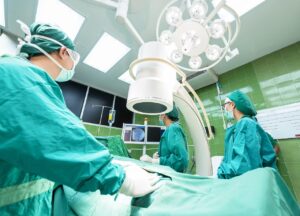
Orthognathic surgery is a procedure designed to correct facial bone imbalances that affect facial aesthetics and certain functions, preventing individuals from leading a truly normal life. Despite major advances in recent times and the incorporation of modern technologies, there are still aspects where scientific evidence is partial or under development.
This type of surgery repositions the facial bones, mainly the upper jaw (maxilla) and the lower jaw (mandible), to restore stable occlusion and improve facial harmony. Its benefits include correcting prominent or recessed jaws, open bite, facial asymmetries, and a pronounced gingival smile. Furthermore, it can also help solve the problem of obstructive sleep apnea, promoting better rest.
What we know with certainty today
Currently, we have objective data and clinical results that support the efficacy of orthognathic surgery when performed in specialized centers by expert teams. Among the most notable points are the following:
Greater precision thanks to 3D digital planning, which allows the surgery to be simulated before it is performed.
Virtual models created from high-resolution scans that help understand complex bone relationships and prepare personalized surgical guides.
Improved transfer of the virtual plan to the operating room, which increases the overall precision of the procedure.
Although there is no conclusive evidence that digital planning shortens the total treatment time in all cases, it is known to improve the visualization of bone movements and communication between the specialist and the patient. We also know that the combination of surgery and orthodontics is essential for correctly aligning the teeth before and after the intervention. This orthodontics can be carried out with metal brackets, aesthetic brackets, or clear aligners, depending on each person’s needs.
Aspects requiring further research
Despite the proven efficacy of orthognathic surgery, there are still some key factors and variables that require analysis from different perspectives in order to further refine the protocol:
Comparisons between methods. Although three-dimensional planning, which is already widely used, has demonstrated its efficacy, broader and controlled research could define in which situations digital planning offers a tangible benefit.
Aesthetic prediction. Accurately predicting the response of the facial soft tissues remains a challenge. Digital simulations offer truly useful approximations, but some individual factors such as skin elasticity, musculature, and scarring influence the postoperative evolution.
Emerging technologies. Tools like artificial intelligence systems are already yielding results, but they are still in the exploratory phase.
Considering all this, it must be remembered that, despite being an increasingly significant aid, the real and definitive success of orthognathic surgery still lies in the hands of the expert surgeon. At Clínica Birbe, we are very aware of this: Dr. Birbe, with over 25 years of experience and an internationally recognized curriculum, works together with a expert multidisciplinary team, and this collaborative work is what truly makes the difference for the patient.
Looking to the future with prudent expectations
The integration of advanced technologies, including artificial intelligence, promises to improve planning and surgical precision. However, these innovations will always be a support, not a replacement for clinical evaluation. Both biocompatible materials and personalized guides could increase technical consistency, while digitalization could further facilitate communication with the patient and optimize the overall treatment experience.
Orthognathic surgery is effective for correcting facial imbalances, improving masticatory function, and, in specific cases, promoting better breathing. The evidence supports most of its benefits, but additional studies will serve to evaluate comparisons between methods, aesthetic predictions, and the impact of emerging technologies. Therefore, at Clínica Birbe, we are always up-to-date with the latest advances in maxillofacial surgery.
Staying current with these important advances is part of our work philosophy. We know that the future lies in an even greater integration of digital tools and the experience of professionals. This allows us to offer more precise, safer, and more individualized treatments. Careful planning and multidisciplinary coordination remain the pillars of a reliable and effective procedure.